Case Studies
Model Line Transformation Strategy
How do we modernize the digital backbone of automotive manufacturing while aligning leadership, plant operations, engineering, and production teams around one scalable vision?
- Role
- Visual Strategy Lead
- Team
- Manufacturing, engineering, data, transformation
- Timeline
- Multi-year roadmap
- Client
- Toyota
Numbers that matter
Context
In automotive manufacturing, the "model line" is far more than a production schedule. It is the operational heartbeat connecting vehicle programs, plant readiness, supply chain coordination, workforce planning, tooling, robotics, and production execution. When these systems become fragmented, the ripple effects are enormous: launch delays, communication breakdowns, inefficient workflows, and increased operational risk.
An automotive manufacturing client was facing exactly this challenge. Their existing model line ecosystem had evolved over decades through disconnected tools, siloed reporting structures, and inconsistent operational processes across multiple teams. Leadership recognized that modernization was necessary, but the scale and complexity of the transformation made alignment difficult.
My role was to help transform highly technical manufacturing strategy into a human-centered, executive-level experience that people across the organization could understand, rally behind, and operationalize.
Problem
The organization was attempting to modernize a deeply complex manufacturing environment involving multiple operational systems, legacy processes, and cross-functional dependencies tied to vehicle production planning. While the technical teams understood the operational challenges, there was no unified narrative connecting manufacturing operations, plant leadership, engineering teams, data and analytics teams, supply chain stakeholders, and executive leadership.
Operational workflows varied between business units. Legacy systems created inconsistent data visibility. Teams relied heavily on manual reporting and disconnected communication. Leadership struggled to visualize transformation priorities across a multi-year roadmap, and technical discussions became too abstract for broader organizational alignment — increasing change management risk at every step.
The challenge wasn't simply designing interfaces. The challenge was designing organizational clarity.
Approach
My responsibility centered around translating operational complexity into visual strategy and human-centered communication frameworks that could drive organizational alignment. I partnered closely with senior stakeholders, manufacturing leaders, architects, engineers, and transformation teams to understand current-state workflows, production planning dependencies, data flow bottlenecks, operational pain points, future-state goals, and risks to adoption.
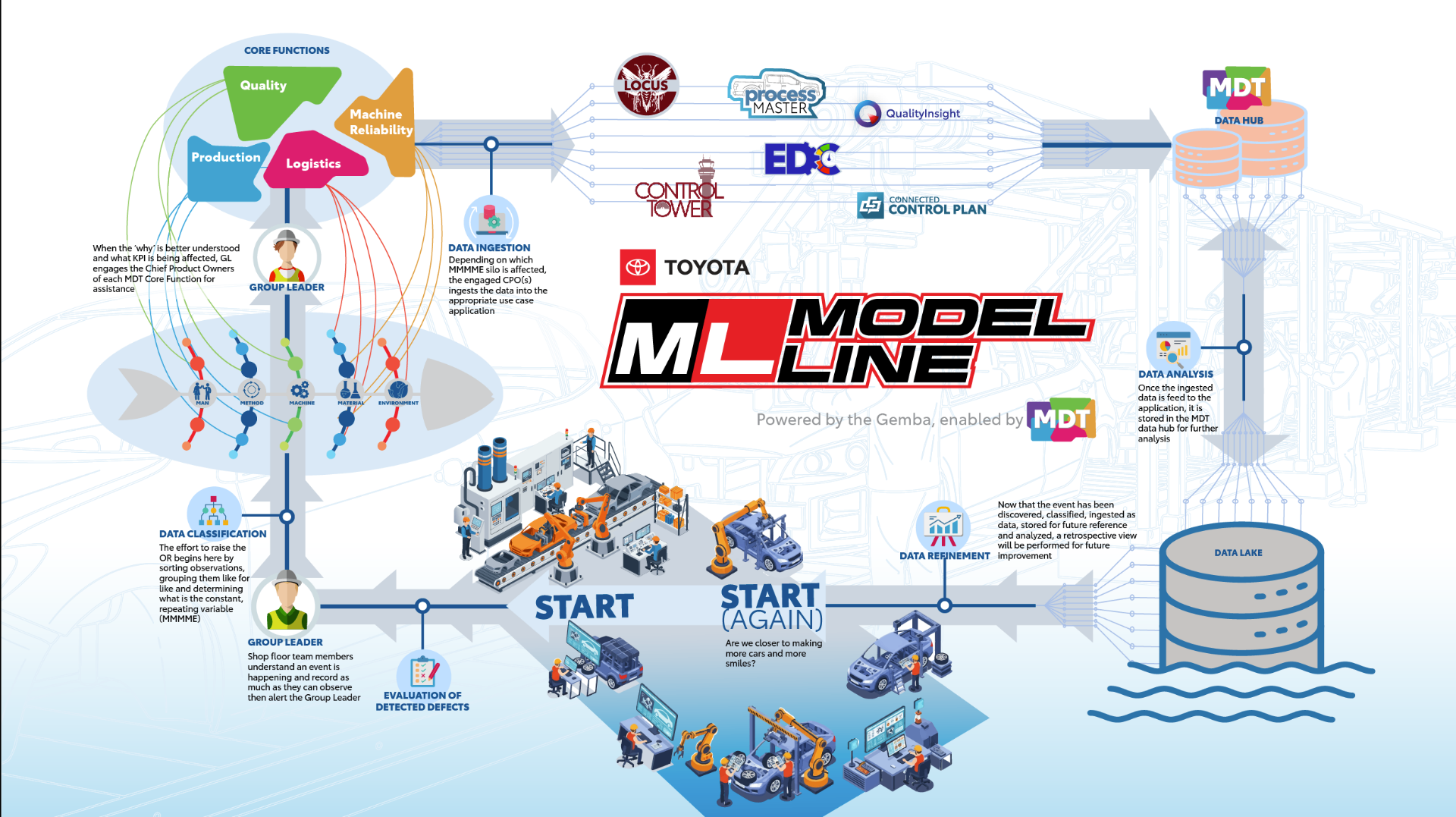
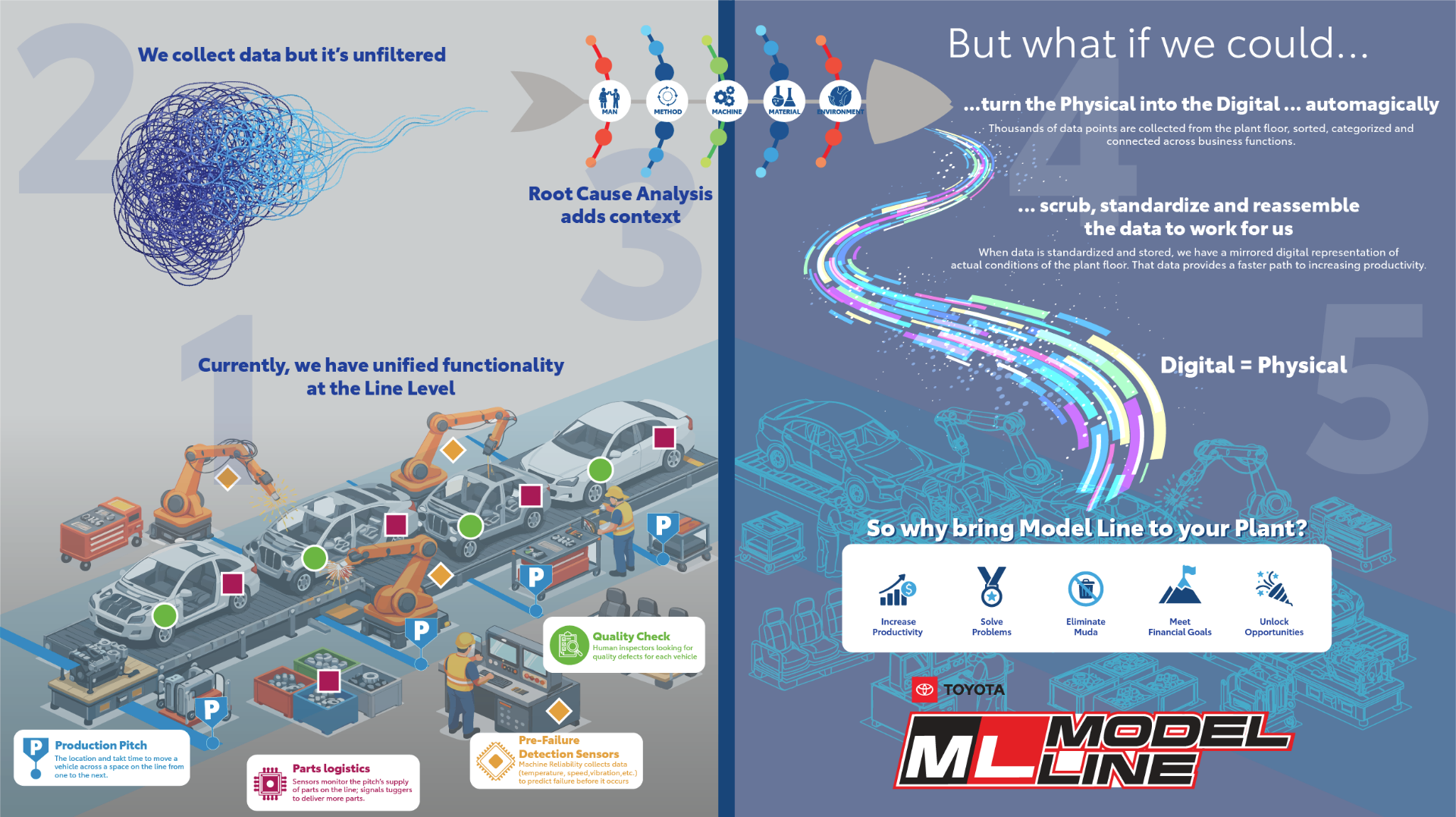
Executive Storytelling. Manufacturing transformation discussions often became buried in technical jargon, disconnected spreadsheets, and highly detailed engineering conversations. I helped create executive-level narratives that simplified complexity into understandable operational stories — strategic roadmap visualizations, future-state ecosystem diagrams, manufacturing capability models, process transformation journeys, operational dependency mapping, and presentation storytelling frameworks.
Human-Centered Transformation. Large-scale operational change fails when people cannot see themselves inside the future-state experience. I designed artifacts that connected strategy to real operational workflows: role-based workflow visualization, simplified operational narratives, cross-functional alignment workshops, future-state experience mapping, and transformation playbooks with supporting visuals.
Visualizing Manufacturing at Scale. I transformed abstract systems into visual experiences teams could understand quickly — operational maps, data ecosystem visualizations, production readiness frameworks, transformation journey diagrams, multi-year strategic roadmap presentations, and motion graphics for executive communication.
Solution
The final outcome was a scalable transformation communication framework that helped unify operational, technical, and leadership teams around a shared manufacturing modernization vision. The work enabled the organization to better communicate long-term transformation priorities, create alignment between manufacturing and leadership teams, simplify highly technical operational concepts, increase visibility into future-state dependencies, support change management efforts, and establish clearer roadmaps across workstreams.
Most importantly, the engagement helped transform manufacturing modernization from a disconnected technical initiative into a shared organizational vision — reinforcing the value of combining human-centered design, executive storytelling, operational strategy, visual communication, and digital transformation thinking inside large-scale manufacturing environments.
Gallery
Keep exploring
More Case Studies
Total Loss Experience
Easing the pain when customers total a financed vehicle.
Aircraft Health Management System
Real-time in-flight parts monitoring for ground crews.
Executive Online Training
Mandatory learning that holds executive attention.
Relationship Manager Experience
Expediting loan approvals while the customer is at the dealership.
Have a similar challenge?
Let's talk about how strategy and design can move it forward.